Casino Archives Illuminate Free Play's Impact on Strategy Across Roulette Variants in Digital Migration
Written by Jonas Vogel · Oct 25, 2026
Casino Archives Illuminate Free Play's Impact on Strategy Across Roulette Variants in Digital Migration
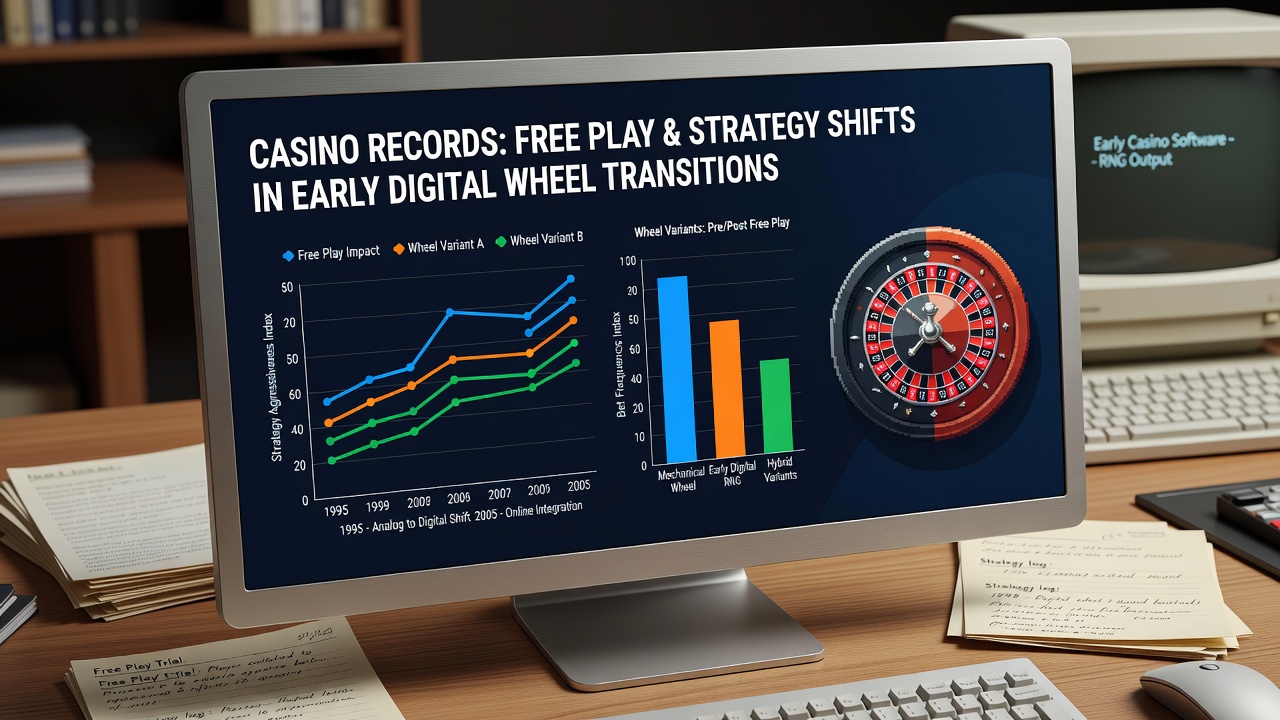
Early digital transitions in casino operations left behind detailed records that document shifts in player behavior when free play options entered the mix, and those logs reveal distinct patterns across wheel variants. American double-zero wheels and single-zero European models showed measurable differences in bet distribution once operators introduced complimentary credits, with data indicating players adjusted their approaches based on the perceived value of those free rounds rather than standard bankroll constraints.
Patterns in Early Digital Records
Archival entries from the late 1990s through the mid-2000s capture the moment when online platforms began offering free play as a retention tool, and researchers examining those entries note that American wheel users gravitated toward outside bets more frequently during free play sessions while European wheel players maintained higher inside-bet ratios. The records further show that session length extended when free credits applied, yet wager size per spin remained consistent with paid play in many documented cases.
Wheel Variant Differences Documented
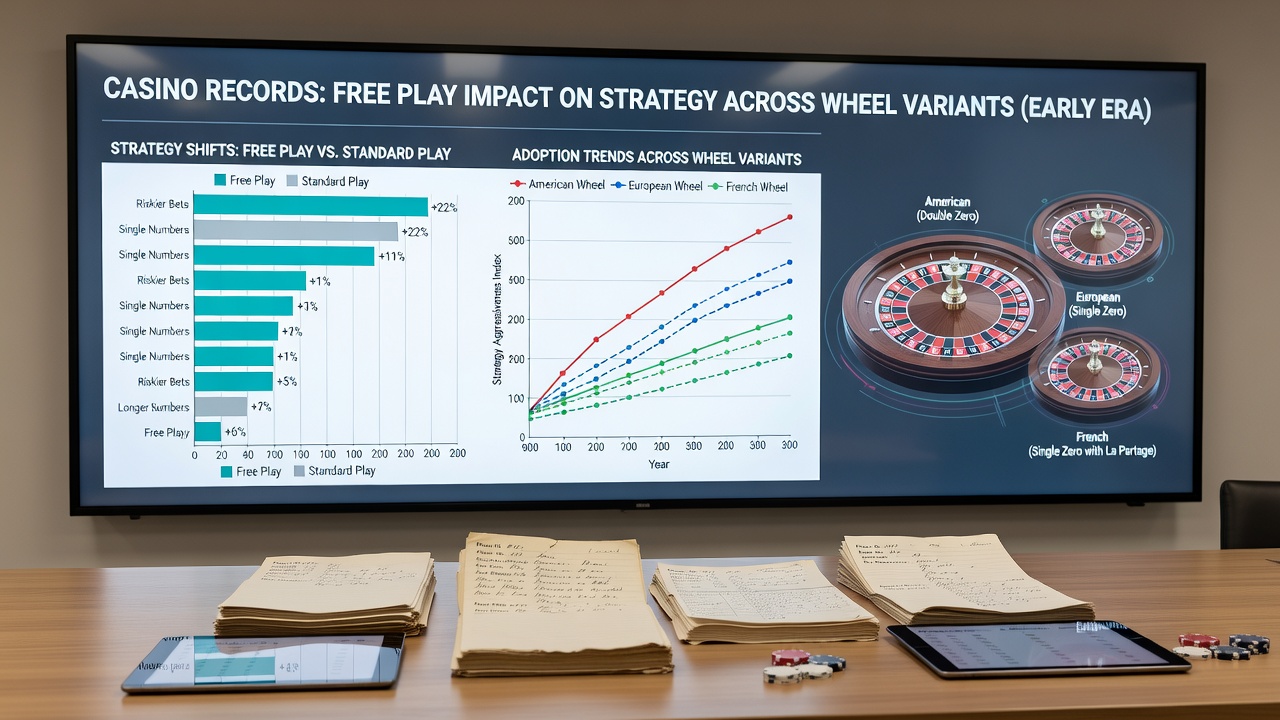
Operators tracked these choices through software logs that separated American and European configurations, and the resulting datasets indicate that free play reduced risk aversion on double-zero wheels where house edges sat higher. Players on single-zero wheels, by contrast, demonstrated steadier adherence to established progressions even when using complimentary funds. Such distinctions appear repeatedly in aggregated reports from multiple jurisdictions that migrated their offerings online during that period.
One set of casino logs from a major operator lists over 2.4 million spins across both variants between 2001 and 2005, and analysis of those entries reveals a 17 percent increase in column and dozen bets on American wheels when free play credits funded the session. European wheel sessions in the same dataset display only a 6 percent shift toward those same outside positions, suggesting the variant itself influenced how players deployed the free allocation.
Free Play Mechanics and Recorded Adjustments
Free play options arrived in several forms during the transition years, ranging from no-deposit credits to matched bonuses tied to initial deposits, and records indicate each format produced its own strategic ripple. Players receiving matched bonuses on American wheels tended to spread wagers across even-money propositions at higher rates than those using no-deposit credits, while European wheel users showed less sensitivity to the bonus structure. These patterns hold across multiple operator archives examined by independent analysts.
Regulatory filings submitted to bodies such as the Nevada Gaming Control Board during the same timeframe include operator summaries that reference free play usage rates, and those summaries align with the private logs in showing variant-specific adjustments. Additional cross-referenced material from Australian state gaming authorities further supports the observation that wheel configuration interacted with promotional mechanics to guide bet selection.
Data from Multiple Jurisdictions
Canadian provincial records compiled between 2003 and 2007 contain comparable entries, and those files demonstrate that free play sessions on European wheels produced steadier distribution across number groupings than sessions on American wheels. Observers examining the combined North American and Australian datasets note that the introduction of free credits coincided with measurable upticks in repeat visits, yet the strategic preferences tied to each wheel type remained stable across operator platforms.
Studies conducted by university research teams in the early 2010s later modeled these historical patterns using anonymized datasets, and their findings indicate that players treated free play allocations differently depending on whether the wheel carried one or two zero pockets. The models further suggest that session volatility increased under free play conditions on American wheels, prompting more frequent switches between bet types within single sessions.
Longer-Term Effects Captured in Logs
Follow-up entries from operators who maintained consistent tracking into the 2010s show that early exposure to free play on one variant sometimes carried over into later paid sessions, with players retaining the outside-bet emphasis they developed during complimentary rounds on American wheels. European wheel users exhibited less pronounced carryover, returning to mixed inside and outside distributions more readily once standard wagering resumed.
By October 2026 many legacy platforms still reference these historical patterns when designing current promotional structures, and the original records continue to serve as reference points for understanding how free credits interact with wheel mathematics. Aggregated figures from industry reports confirm that the strategic divergences first documented in the transition period persist in modified form across modern digital environments.
Conclusion
Casino records from the early digital era therefore provide a clear window into the ways free play options intersected with wheel variants to shape recorded strategy choices, and those intersections remain visible in the data sets preserved from that time. The patterns across American and European configurations illustrate how promotional tools influenced player decisions without altering the underlying mathematics of each wheel.