The Impact of Regional Wheel Designs on Payout Dynamics Across Roulette Traditions and Digital Adaptations
Written by Finley Sullivan · Aug 18, 2026
The Impact of Regional Wheel Designs on Payout Dynamics Across Roulette Traditions and Digital Adaptations
Regional Wheel Configurations and Their Historical Roots
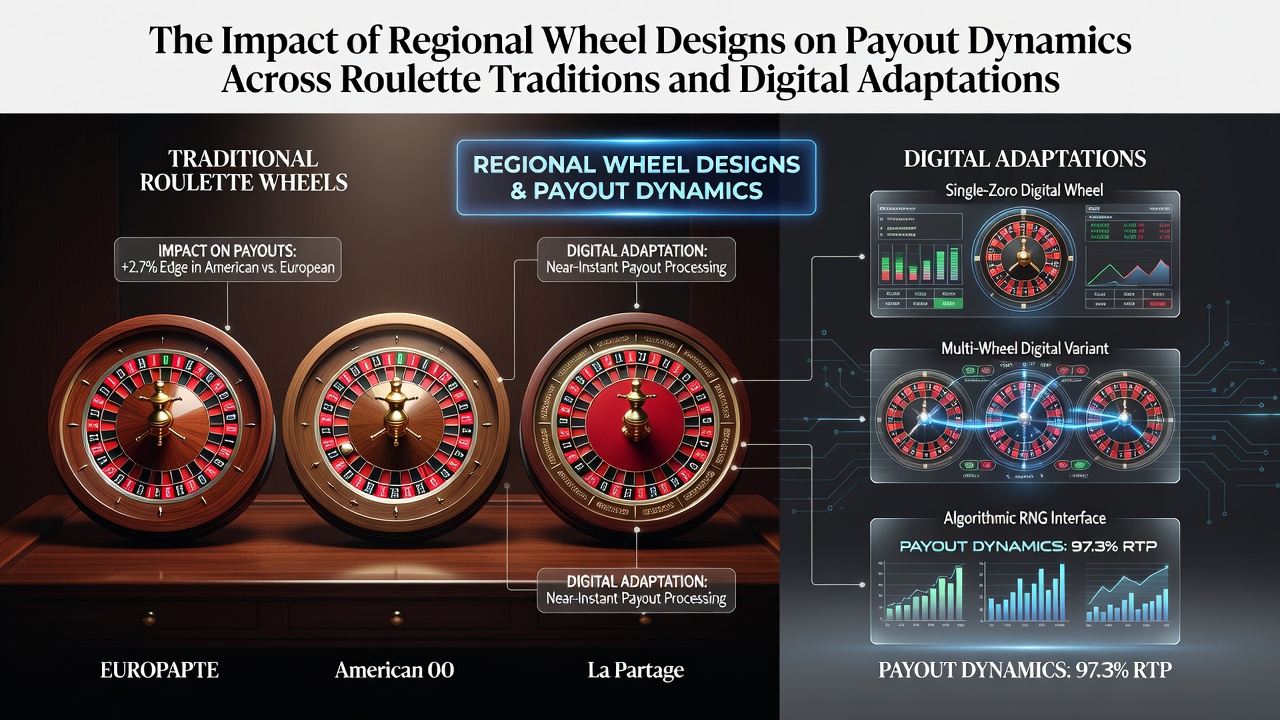
European roulette wheels feature 37 pockets including a single zero, while American versions incorporate 38 pockets with both a zero and double zero; these differences trace back to 18th-century France and later adaptations in the United States during the 19th century. Researchers examining historical casino records note that the extra pocket in American designs emerged to increase house advantage without altering standard payout ratios such as 35 to 1 for straight-up bets. Observers note that French wheels often include additional rules like La Partage and En Prison, which return half the stake on even-money bets when zero appears and thereby lower the effective house edge to around 1.35 percent compared with 2.7 percent on standard European wheels.
Data from regulatory filings reveal consistent patterns where wheel pocket counts directly influence long-term payout percentages across land-based venues. Studies conducted by mathematics departments at various universities have quantified these variances through probability models that account for every possible outcome on the wheel. Those models demonstrate how the double-zero pocket shifts overall return rates without changing the visual layout or betting grid that players encounter.
Payout Structures and Probability Shifts
Standard payouts remain identical across wheel types yet the probability of landing on any given number changes with pocket count, producing measurable differences in expected returns. Experts analyzing millions of spins from multiple jurisdictions have documented that American wheels generate a house edge of 5.26 percent on most bets while European counterparts maintain 2.7 percent under identical payout rules. Figures released by the Nevada Gaming Control Board illustrate these dynamics through aggregated win percentages reported by licensed properties over successive quarters.
Wheel designs in Asia-Pacific regions frequently adopt European specifications with occasional local modifications such as triple-zero variants that further adjust probabilities. Industry reports from the European Gaming and Betting Association highlight how these regional choices affect both player retention metrics and operator revenue streams without requiring changes to the physical betting layout.
Digital Adaptations and Certification Standards
Online platforms replicate physical wheel mechanics through certified random number generators that mirror the exact pocket distributions found in regional traditions. Software providers must submit their algorithms for testing by independent laboratories before receiving approval from gaming authorities in multiple territories. Those certifications verify that virtual outcomes align with the same statistical distributions observed on mechanical wheels used in physical casinos.
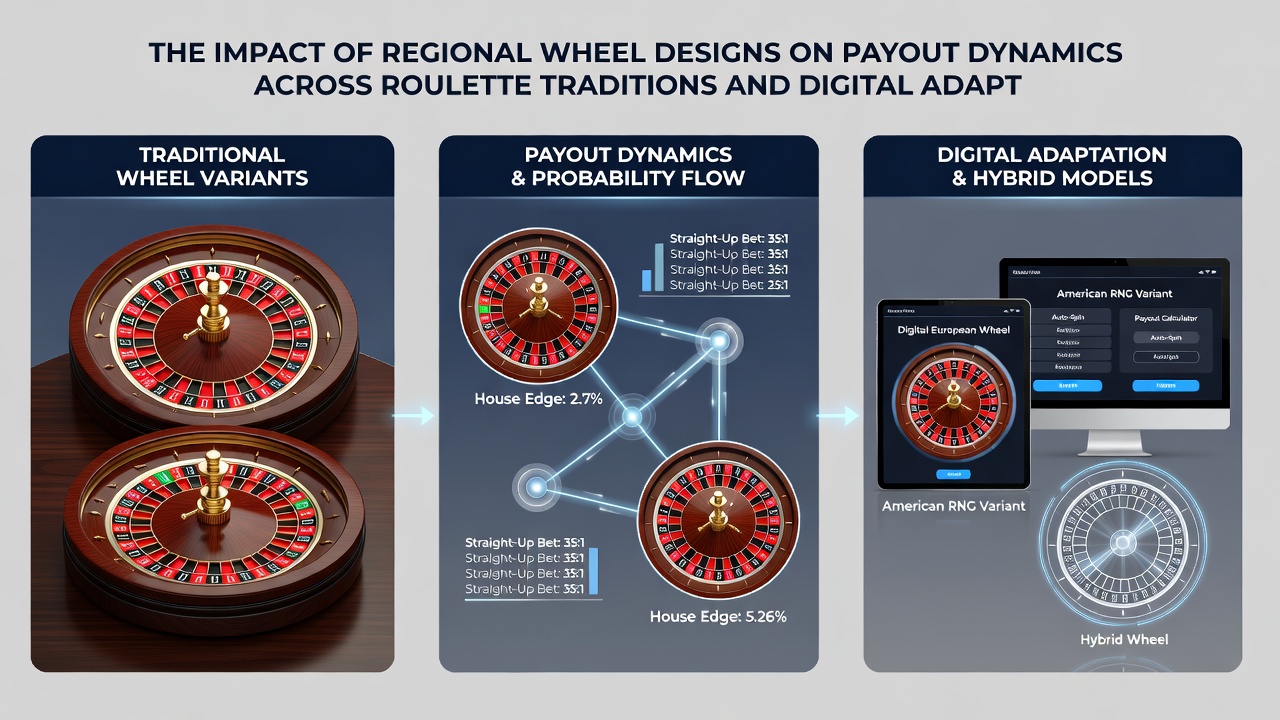
Live-dealer streams transmit footage from physical wheels located in studios that maintain either single-zero or double-zero configurations depending on the target market. Operators adjust these feeds to match player preferences while regulatory bodies in Canada and Australia require transparent disclosure of wheel specifications on all digital tables. Research published in gaming technology journals shows that RNG implementations achieve near-identical long-term payout ratios to their mechanical counterparts when properly calibrated.
Hybrid games combine elements from multiple traditions by offering selectable wheel types within a single interface, allowing users to experience varying house edges without switching platforms. Data collected from these systems indicate steady adoption rates across different player demographics since their introduction in the early 2020s.
Comparative Analysis Across Jurisdictions
Regulatory frameworks in the United States emphasize disclosure of wheel type on all gaming devices, whereas European licensing bodies focus on testing procedures that confirm payout percentages remain within specified tolerances. Comparative studies compiled by international gaming research centers reveal that operators in jurisdictions with stricter wheel-design rules experience lower variance in reported hold percentages over time. Those findings emerge from aggregated transaction data rather than individual session results.
August 2026 marks the scheduled rollout of updated technical standards in several Australian states that require explicit labeling of wheel variants on all digital roulette products, aligning local practices more closely with European certification models. Such changes build upon existing requirements for RNG audits and create unified reporting formats that facilitate cross-border comparisons of payout dynamics.
Conclusion
Regional wheel designs continue to shape payout dynamics through variations in pocket count and supplementary rules that modify effective house edges without altering core betting structures. Digital adaptations preserve these distinctions through certified technology that replicates physical outcomes across global markets. Observers tracking industry developments note that ongoing regulatory harmonization efforts maintain these core differences while improving transparency for participants worldwide. The interplay between tradition and technology ensures that payout calculations remain tied to specific wheel configurations regardless of delivery format.